New developments in qualitative research methodologies
While there is a broad continuum of innovation, improvisation and experimentation in qualitative research, I focus here on developments in visual methods and spatial mapping as examples.
- Visual methods in qualitative research
There is a long history of photographs being used in the social sciences, for example in community sociology and ethnography, although the ethical implications of using these images sometimes seem to have often gone under the radar. Later, technological developments enabled smaller cameras, then smartphone cameras, opening the door to research participants making choices about the production of photos and videos, and then to the sharing of these online. In recent years, researchers have become interested in exploring the ethical issues entailed in the use of photos and videos in research. For example, Fride Haram Klykken advocates a relationally situated approach to informed consent in the context of her video ethnography with a media studies class.
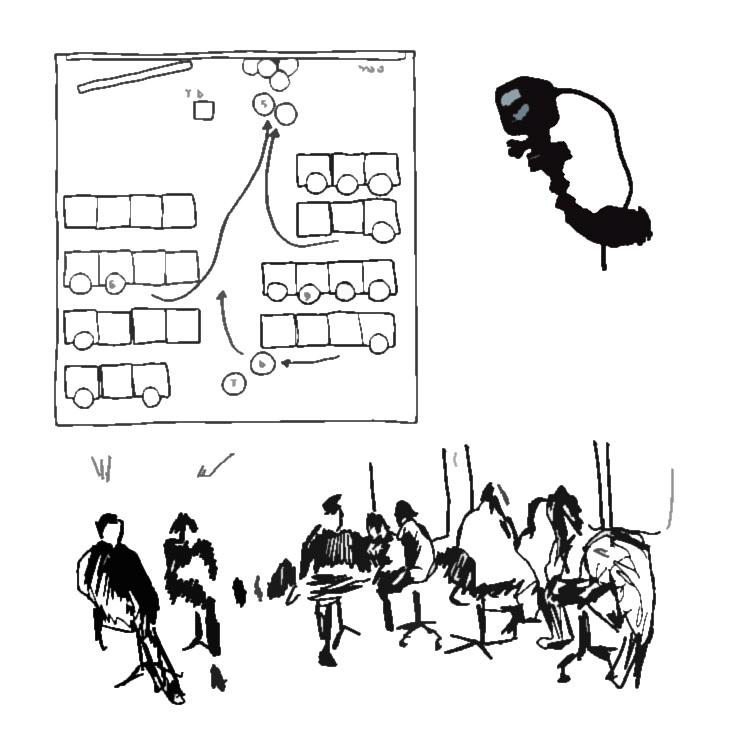
Map-sketch of classroom (Fride Harram Klykken 2025)
As interest in visual methodologies became more widespread, new ways of incorporating images into qualitative research were developed, such as photo-elicitation – in which the interviewer may offer photographs as prompts for the interview, or ask interviewees to bring their own photographs to inform the discussion. Meanwhile, approaches such as Photovoice aimed to empower participants by putting the camera ‘in their hands’, and so to open up communication in difficult or precarious settings.
An emphasis on participatory visual methodologies may be seen as having the potential to enhance talk-based research, yet we should not overlook the complex ethical issues that may arise. Because these often emerge from interactions in the field, they may be difficult to anticipate in conventional ethics reviews. Consequently, some researchers advocate a processual approach so as to touch base at key points in a project, rather than relying on prospective review of a proposal. Concerns raised by participatory visual methods go beyond the well-rehearsed issues around privacy and anonymity: these approaches have generated new issues for consideration, such as the question of whether participants should have the choice of having their names attached to images which they produce. Although this must be weighed up carefully from an ethical point of view in each case — as naming one participant could in some contexts result in others being identified — researchers may identify circumstances where it is appropriate for participants to put names to images if they wish to do so, as Van Praag et al. have described in relation to their work using photos in interviews. This exemplifies how ethical practices are evolving alongside methodologies, in careful discussion with ethics committees.
- Mapping in qualitative research
Mapping – as well as being a technique long used in human geography – has been widely deployed in a range of social science disciplines to represent connections between spaces and lived experience. For example, qualitative researchers have in recent years layered data from geospatial technologies onto maps and drawings produced by fieldworkers or participants, with the aim of exploring complex and topical issues of mobility and migration. While powerful mapping technologies have generated great enthusiasm, this needs to be matched by engagement with the ethical implications of using fine-grained geospatial data in research.
In this vein, Akesson and Frensch describe a range of ethical issues arising from use of GPS mapping in their work with war-affected families in Palestine, Lebanon and Canada. Here, GPS technologies were used in combination with qualitative data from narrative interviews, drawings, activity logging by participants, and neighbourhood walks to explore the social and spatial experiences of marginalised refugee populations living in precarious settings. They acknowledge that “because the notion of mobility is tied to issues of justice, discrimination, and marginalization, the study of mobility is inherently an ethical issue” (p. 151), and point to the opportunities this approach offers for better understanding these experiences. As well as highlighting ethical issues that arose, they carefully describe the mitigations they put in place in their project to address risks around surveillance, privacy, confidentiality and spatial reidentification in these projects.
Moving forwards with ethical practice in contemporary qualitative research
Following the proliferation of innovative approaches in qualitative research, discussions about the ethics of using these approaches have matured, moving beyond an initial stage characterised by an absence of ethical guidelines and frameworks. Methodologies continue to evolve — added to which researchers are exploring a range of creative approaches to the dissemination of research findings bringing new perspectives to the table. Changes in how we apply ethical principles are part of this story: for example, researchers have made us of images to make participant information in consent forms more accessible, and others have shown how valid informed consent can be obtained online. Ethics committees should facilitate such innovations in ethical practice where justified, and researchers can develop this agenda by evaluating and writing about innovation in ethical practice.
In Universities in the UK and in a number of other countries, research ethics committees (RECs) are positioned as a keystone for ethical social research. Yet RECs’ procedures have been shaped to a considerable extent by their history of engagement with clinical research ethics. Traditional anticipatory reviews of projects may struggle to envisage the issues that researchers using more dynamic methodologies will face. And, as qualitative methodologies continue to evolve, it is impossible for any committee to be familiar with all the cutting-edge developments in this contemporary landscape. Accordingly, Mark Israel and I emphasise that, instead of placing the emphasis uniquely on research ethics reviews to safeguard ethical conduct in organisations, we need a wider ecosystem that will support good practice: organisations should evaluate the system into which researchers are recruited and ask what more can be done to support ethical practice.
How to promote good ethical practice for novel qualitative methodologies
Explore precedents and take time to explore how other researchers have approached similar ethical dilemmas in relation to innovative qualitative methodologies.
Seek out and make use of ethics guidelines. For example, the International Visual Sociology Association has published guidelines for visual sociology, and advice can be found in the annexes of codes of conduct published by professional bodies and by international groups of researchers, e.g. the BSA’s Ethics Guide and the Ethical Guidelines by the Association of Internet Researchers.
Develop consensus: if there is no consensus or code of conduct for your methodology, or if the existing code seems out of date, it may be time to put forward a position paper on the ethical issues or to initiate discussions to develop a code of practice.
For SRA members without an institutional REC, an independent opinion and guidance can be obtained from the Ethics forum or Ethics appraisal service convened by the SRA.
- For Research Ethics Committees
Recognise that emphasis on researchers’ individual good conduct must be balanced by an engagement with social research ethics across the organisation.
Seek specialised input on emerging discussions about innovative approaches to qualitative research enabled by new technological developments.
Consider the place of iterative/longitudinal ethics reviews for selected projects in cases where the substantive details of the methodology cannot be put on the table for review at the outset.
Facilitate dialogue between researchers and ethics reviewers on the ethical issues arising from novel qualitative methodologies, for example via webinars.
Review institutional resources for social research ethics and update as necessary.
References
Akesson, B. and Frensch, K. (2025). The Ethics of Using GPS in Qualitative Research with War-affected Families: experiences of Mobility from Palestine, Lebanon, and Canada. In Helen Busby (Ed.) Reframing Qualitative Research Ethics, Advances in Research Ethics and Integrity Vol. 12:145-160. https://doi.org/10.1108/S2398-601820250000012009
Busby, H. and Israel, M. (2025). Qualitative Research Ethics: An Agenda for Researchers and Research Organisations. In Helen Busby (Ed.) Reframing Qualitative Research Ethics. Advances in Research Ethics and Integrity Vol. 12: 253-262. https://doi.org/10.1108/S2398-601820250000012015
Franzke, A. S., Bechmann, A., Zimmer, M., Ess, C. and the Association of Internet Researchers. (2020). Internet research: Ethical guidelines 3.0. https://aoir.org/reports/ethics3.pdf
Klykken, F.H. (2025). Informed Consent in Qualitative Research: Lessons on Relationality from a Technologically Dense Classroom". In Helen Busby (Ed.) Reframing Qualitative Research Ethics. Advances in Research Ethics and Integrity, Vol. 12: 57-73. https://doi.org/10.1108/S2398-601820250000012004
Mannay, D. (2020). Revisualizing data: engagement, impact and multimodal dissemination. In Luc Pauwels and Dawn Mannay (Eds.) Revisualizing data: engagement, impact and multimodal dissemination (Second ed., 659-669). https://doi.org/10.4135/9781526417015.n42
Papademas, D. and the International Visual Sociology Association. (2009). IVSA Code of Research Ethics and Guidelines. Visual Studies, 24,3: 250-257. https://doi.org/10.1080/14725860903309187
Van Praag, L., Miri, A., Klaver, K. & Deneva. N. (2025). Ethical considerations during photo-eliciting trajectories with migrantised women focused on ‘gender empowerment’ in civil society organisations. In Helen Busby (Ed.) Reframing Qualitative Research Ethics. Advances in Research Ethics and Integrity Vol. 12: 75–94. https://doi.org/10.1108/S2398-601820250000012005
Title image: Ethics Committee' by Nick Youngson (Via https://pix4free.org/) CC BY-SA 3.0
Author Bio:
Helen Busby studied medical anthropology and sociology and led academic research on health and novel biotechnologies. She now consults on research ethics for researchers and international organisations. She can be reached via https://www.helenbusby.com/. Her edited book Reframing Qualitative Research Ethics features chapters from researchers showing how they are addressing the ethical challenges in research involving novel methodologies, along with in-depth proposals for supporting ethical practice in qualitative research.