When the SRA emailed me about MethodsCon Futures, I was really excited. Not only was this a free conference, in Manchester, 15 minutes cycling distance from my house, but it also had really relevant themes for my work - including participatory methods and climate change research.
I went to 6 sessions over the two-day conference: too much to sum up here but I’ll share some highlights.
Imagining everyday local futures of living with water and energy
The first session I attended was led jointly by Heidi Mendoza and Dr Mel Rohse.
Heidi spoke about her work on the PerfectSTORM project, working with communities in Peru to imagine the future of drought events. She used both drawing and verbal storytelling to enable community members to share their vision of the future based on food - a topic that matters deeply to them and is central to their identity.
Heidi shared that working on the idea of the ‘future’ can be really challenging, especially when communities haven’t been given this opportunity to imagine or come into the process with a lot of fear or trepidation. Building trust and being flexible with research methods to find the right approach for the community are keys to overcoming these challenges.
Dr Rohse presented on the work she had been doing with Shared Green Deal: a series of ‘social experiments’ with citizens, businesses, schools, and NGOs in different European cities. Her focus was on ‘community visioning’ and she covered a number of ways this can take place, from improv sessions with theatre practitioners to community workshops. Dr Rohse positioned her role as a ‘mentor’: the practitioners (local authorities and NGOs) were the ones doing the research, with her and other academics taking a supporting role.
Both speakers’ reflections helped me understand how there is not ‘one-size-fits-all’ approach to creating a vision of a future; each community and context will require different approaches and foci. For the best outcomes, those approaches and foci should be decided with and by the communities who are doing the visioning.
Environmental Change is an Equity Issue
This session was wide-ranging, looking at issues of equity across environmental research as well as the academic profession more generally.
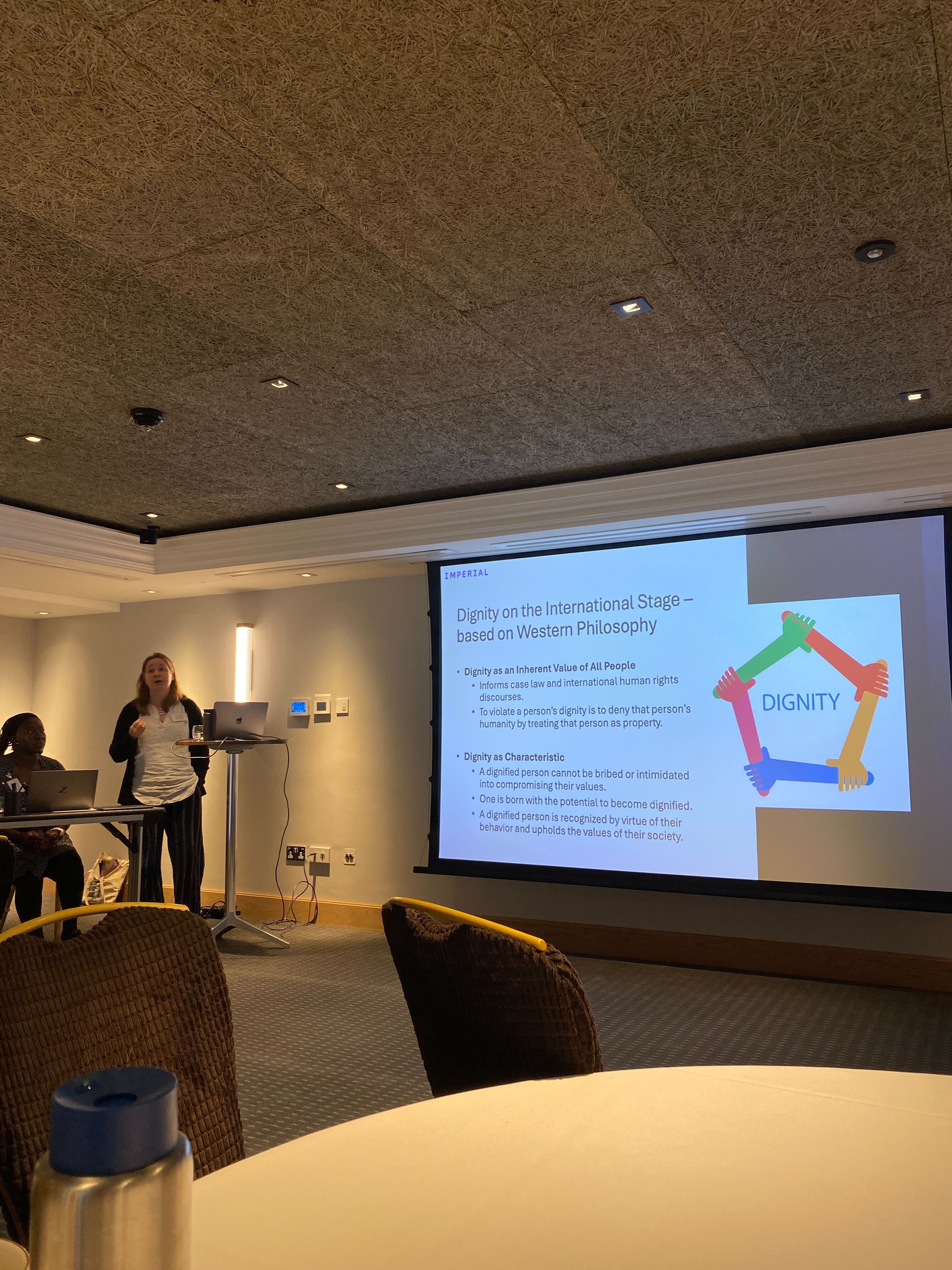 Dr Caroline Howe outlined a number of challenges for an equitable approach to environmental research. She spoke of how Western values (e.g. ‘Dignity) can flatten the diversity of thought that exists within other cultures in the world, narrow our understanding as researchers, and limit progress towards environmental goals.
Dr Howe also highlighted the challenge of biases in the narrative, as so much of the knowledge produced within the environmental sector is done by a white, Western, and male academia.
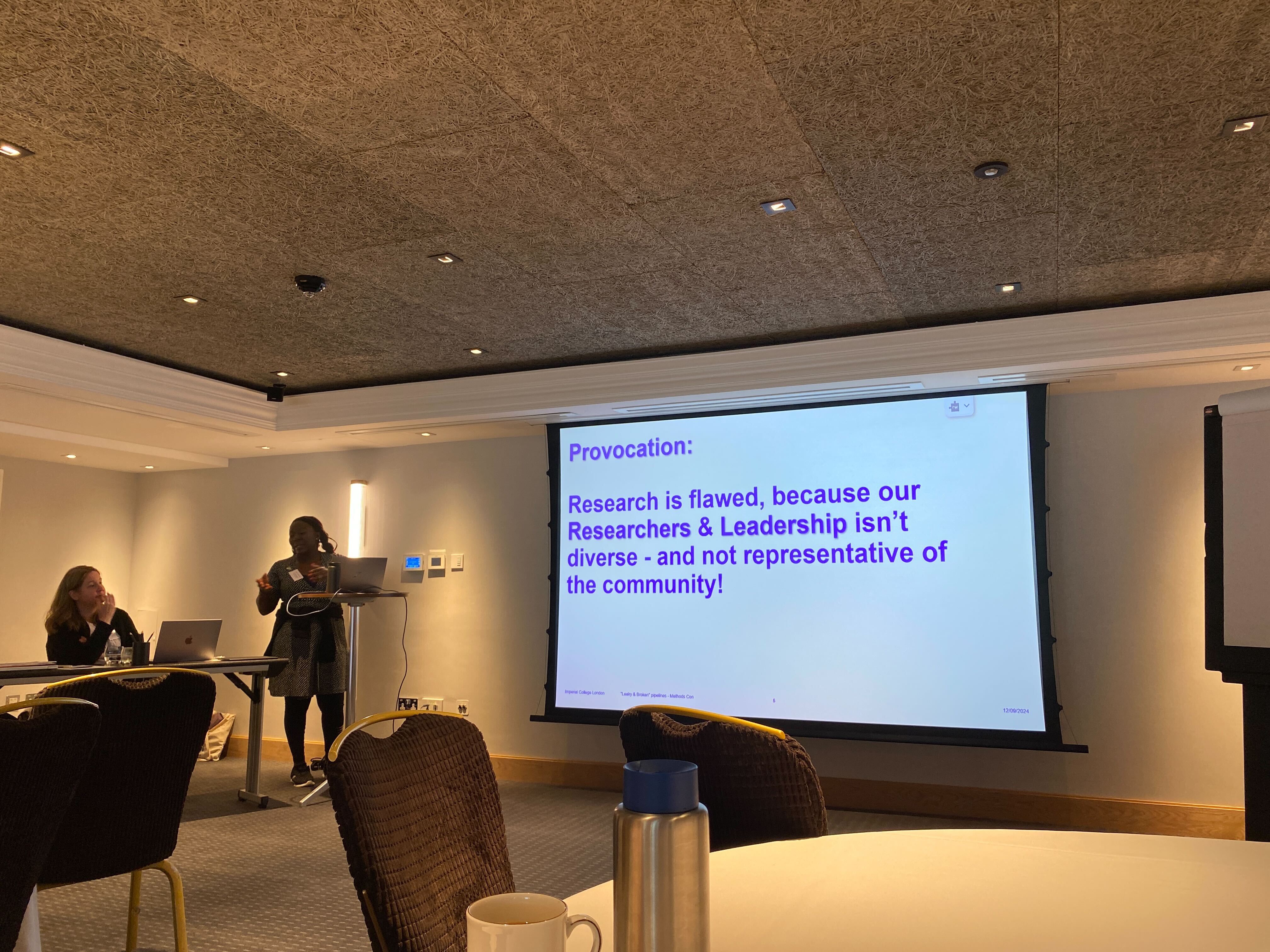 This final challenge was expanded on by Dr Sarah Essilfie-Quaye, who is investigating the ‘leaky and broken pipelines’ of academia, and how women of colour (in particular) drop out of academia and/or face barriers to entry. While her presentation was about careers in academia, I found it was very applicable to my own work since the structural issues in energy and retrofit are comparable and very deeply ingrained!
Finally, Yurong Yu shared her research into differing understanding of ‘values’ across languages and cultures. She spoke about how value clashes are inevitable when collaborating across nations and disciplines, and therefore how we need good methods to understand each other's values in order to better work together to overcome the challenges facing us in the climate crisis. Some such methods she cited are the value hierarchy and the personal values dictionary.
Cathays Futures: An innovative approach to knowledge mobilisation and co-production
I was excited to learn about the Cathays Futures project, as a process of co-producing knowledge between researchers, service delivery teams and community members is something I’ve been grappling with in my own work on the Energise Manchester project.
Dr Hayley Trowbridge shared how she and the team of social researchers at SPARK are collaborating with the local Cathays community to enhance the community’s well being. Methods included:
- Group and one-to-one meetings with community stakeholders, which were somewhat unstructured and scheduled throughout the process as to meet the needs of the community stakeholders in each moment
- Decision-making matrix to help researchers and community partners see how research findings could be translated to Cathays
- Three horizons map which shows now and the future, and how to get from here to there using ‘stepping stones’.
- Futures wheel, a tool which gets you thinking forward about impacts of actions and avoid unintended consequences
- Roadmapping, which supports planning and action.
We got to test out the Futures Wheel in our tables, based on a set scenario. It was good to be able to try out the tool, and helped me reflect on how it might be applied within my own practice of workshop facilitation.
Participatory Prospective Analysis and Participatory Action Research: Intersections for just urban futures
In this session,
Daniela Cocco-Beltrame and
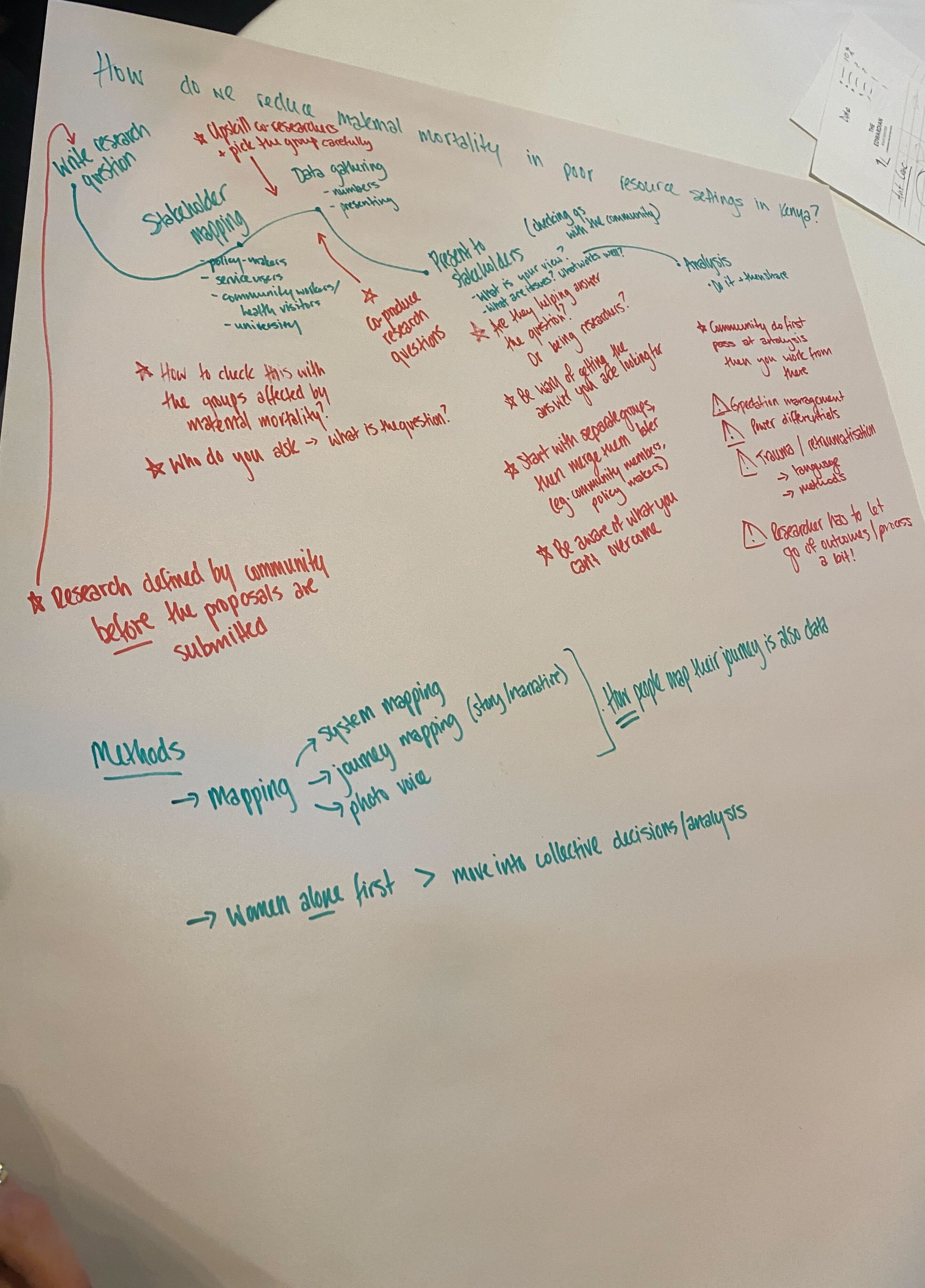
Mariana C. Hernandez-Montilla explored participatory prospective analysis (PPA) and participatory action research (PAR). After a brief presentation, we were encouraged to apply these methods in the context of a research question brought by a person on our table.
We worked in groups to consider how we could answer the chosen research question through both participatory and future-looking methods.I enjoyed the peer-learning and application-based approach to this session, which set me up well for the second day of the conference.
Participatory research: how do we support it, what can it do?
The second day of the conference shifted from short sessions to longer workshops. I really appreciated this shift, as a two-day conference can often result in ‘information overload’. The format helped to consolidate what I’d learned on day one and deepen connections with other researchers.
This session was run jointly by the CoPro Futures Enquiry project team and the Reimagining Leadership project team. After hearing about their projects and some context about the state of participatory research within academia, we split into groups around our tables and discussed our experiences of undertaking participatory research, navigating barriers in our institutions, and what work-arounds we have developed (working within, around, and through).
I found engaging in this session a bit challenging as an early-career User Researcher working outside of academia, since I wasn’t so familiar with some of the aspects of academic institutions that were being discussed. But there were definitely lessons to share and connections between academia and other sectors, which the group teased out together.
Final reflections
Overall, MethodsCon Futures 2024 was a great experience. I left the second day of the conference feeling energised and having made genuine connections with other researchers working in complementary areas.
I’m looking forward to implementing some of the methods directly into my work, and to learning more about different approaches to research that were shared.
Thank you to the SRA and NCRM: til next year!